Building a Biblical Communications Narrative on Capitol Hill
“And Joshua set up twelve stones in the midst of Jordan, in the place where the feet of the priests which bare the ark of the covenant stood: and they are there unto this day.“
– Joshua 4:9
“Remove not the ancient landmark, which thy fathers have set.“
– Proverbs 22:28
The Bible is full of reminders about what the Lord has done through his people. The history of God’s people has been an object of study for thousands of years and the Bible is one of the oldest history books in the world. History is the narratives of our past and communicates the world around us. It is how we make sense of our own worlds. Each narrative, especially in Scripture, is laid out by an arc of Creation, Fall, and Redemption. It is the historical logic of all communications, irrespective of language.
There are many ways to communicate a narrative and tell the world a story. Narrative plays a role in policies and how they are communicated and how history itself is told. In this policy memo I will overview the value of history and narrative, using Scripture as a foundation for narrative composition, and touch upon how narratives function within modern methods of communication, including how to handle communication mistakes and being proactive with communication when needed. This all ties together in how communicators can take the arc of Biblical narrative and apply the power of storytelling to their day-to-day work.
1. Value of History and Narrative
History is continuous. It never ceases because each day history is happening right before our eyes, as every present moment slips by. It would be instructive to consider two recent and very different ways of understanding history. Peter Marshall’s The Light and the Glory and Nicole Hannah-Jones’ The 1619 Project: A New Origin Story stand in rather stark contrast with one another. Marshall seeks to tell the story of American History from a purely Christian perspective that portrays the nation’s Founders as perfect heralds of freedom and religion. In contrast, Hannah-Jones seeks to tell the story of American History from a purely oppressed angle that leaves little room for the Founders to have done any good at all. Both books misrepresent historical events and therefore impair historical understanding of our nation’s origin story.
Examining both books from a Biblical perspective, we may draw a lesson about scripture and the historical development of nations. Sean McDowell and Dennis Prager both noted in their Old Testament research that, “there are a lot of embarrassing details about the Jews that we wouldn’t expect to see if they were trying to fabricate a story, so we have good reason to believe that they were reporting real history. A similar line of evidence is often used in support of the Gospels, which are packed full of embarrassing details about the disciples.”1 If we wanted a truly Biblical perspective of history, then Peter Marshall should have included details that may not have fit his narrative, while Hannah-Jones should have included details that might not have fit her narrative either. George Orwell in 1984 reminds us that, “‘Who controls the past,’ ran the Party slogan, ‘controls the future: who controls the present controls the past.’”2 In that case we must do as Wolstan Dixey states in his book The Trade of Authorship,
Facts, facts, facts; there is nothing but facts. The writer’s first business is to get at these facts exactly —get the meat out of them— and then, by the most direct method, to transmit them to his readers. That is the whole substructure of literature; the groundwork —the anatomy.
Facts, facts, facts; there is nothing but facts. The writer’s first business is to get at these facts exactly —get the meat out of them— and then, by the most direct method, to transmit them to his readers. That is the whole substructure of literature; the groundwork —the anatomy.3
2. Scripture as a Foundation for Narrative
Scripture itself lays a great foundation for how to narrate history in a way that discloses the facts and that highlights both the good and the bad of the subject matter. Looking at the story of David, for example, he is depicted as a “man after God’s own heart” (1Sam 13:14). Despite his exalted status, Scripture also offers an unflinching narration of David’s downfall with Bathsheba. This is a great example of how to tell a historical story that affirms both the redemptive story of how God used David while also including David’s own failures and how that affected Israel’s immediate future. God tells David,
Now therefore the sword shall never depart from thine house; because thou hast despised me, and hast taken the wife of Uriah the Hittite to be thy wife. Thus saith the Lord, Behold, I will raise up evil against thee out of thine own house, and I will take thy wives before thine eyes, and give them unto thy neighbour, and he shall lie with thy wives in the sight of this sun. For thou didst it secretly: but I will do this thing before all Israel, and before the sun. (2 Sam 12:10-12)
Christian theologian Carl Trueman in his book Histories and Fallacies states that “the typical, the conventional, the normal requires no elaborate explanation: it is exactly what is to be expected. It is the strange, the peculiar, the unexpected, the unconventional that needs to be explicated.”4 The founding of America is one plot point in the wider history of Western civilization, one which emphasizes freedom and a desire for self-governance. The founding represents a kind of deviation from the historical norm.
On a related point, Trueman further states that “to undertake the task of history, means that the present must engage with the past, and in doing so, there is always a danger that anachronistic ideas from the present will creep into the analysis in ways that are unhelpful and that ultimately run counter to the evidence.”5 So, we have to remember that “if history could be told in all of its complexity and detail it would provide us with something as chaotic and baffling as life itself; but because it can be condensed there is nothing that cannot be made to seem simple, and the chaos acquires form by virtue of what we chose to omit.”6 All of this gives shape to the power of history and narrative in communication strategy.
An issue today is the ubiquity of powerful communication tools that elevate people who have little real knowledge of what they communicate. History is being rewritten and leaving vulnerable people unsure of whom to trust. Conspiracy theories are rampant. Suspicion and cynicism are ubiquitous. It therefore matters in the extreme that every effort is devoted to offering accurate, credible historical accounts, and do so with clarity and conviction.
Communicators of faith ought to study the biblical narrative from primary and secondary sources and learn how events around the world shape our styles and narratives. Through a biblical study of redemptive history, communicators can better understand the policy decisions of today. Scripture says, “remember the days of old, consider the years of many generations: ask thy father, and he will shew thee; thy elders, and they will tell thee.”7 The narrative arc of Scripture highlights the critical details that lend themselves to self-understanding and to substantive communication. From the act of creation in the book of Genesis to the law of Leviticus, Scripture shows us the wider narrative God wants us to know. For modern day communicators creating a narrative, Scripture is the best example to follow.
3. Narratives in the Modern Communications Sphere
Creating a narrative in the modern world is easy. All one has to have is an idea, communicate it, and let the pieces fall where they may. The communication doesn’t even have to be well done. Sometimes the best communication styles are the most real, raw, and informative. People crave the real world. Looking at Scripture, we are all hoping for the real, raw experience of the Garden of Eden. It is what we long for. We long for an unbroken relationship with God. The only way we can find that is through Christ. When communicating ideas and policy, sometimes the best way to communicate is to be real. Show the people the value of real ideas that are not inflated by flashy work that will never actually pass. As we all seek to find our hope in Christ, communicating in a real way shows people the truth.
Another great example in Scripture is with the fall. Adam and Eve listened to Satan and listening to him led them both astray and to the fall of mankind for the rest of time. When communicating, it is easy to see what others are saying or recommending and decide that what others are doing is best. Unity is important on both sides of the aisle, but truth is more important than unity. Following the crowd can be advantageous, but it just as often leads us astray. The wisdom of crowds cannot compare to the wisdom of God.
Social media has developed incredible capacity for leading people astray with narratives shared one person to another person until the truth is completely obscured. Evil is using social media to conflate the truth and lead people astray. It is important to know the truth and follow the truth and refuse to push narratives that are false or will lead others astray. Between the creation and fall in Scripture is a period of waiting. Waiting to communicate is sometimes the best way to handle a situation. We don’t have to get the information out there as fast as possible.
Looking at the 400 years of history between the Old Testament and the New Testament, where God seems silent, is perhaps illustrative. There are times when it is best that communicators stay silent until they know all the details of a situation. Jumping to conclusions when everyone else is putting out a statement doesn’t mean that the conclusion is accurate. With social media, videos, and information being at our finger tips – sometimes within minutes of an event happening – it is easy to join the rising narrative on either side of the discussion. This gives people opportunities to pick a side and trust that what they see and the narrative they want is true. But, as the 400 years of history in between the Old Testament and the New Testament show us, sometimes silence is best. Sometimes waiting until the narrative plays out and the truth is won is the best way to show the narrative arc.
While communicating a consistent narrative is the key to political survival in this world, mistakes nevertheless occur. Words are uttered that should not have, or something important is left unsaid that should have been said. In these circumstances, history will always look back and will either redeem that, or that will fail you forever. Success and certainty are not guaranteed. Yet, no matter who writes the narrative, there will nevertheless be elements pointing to the truth – even if partial or incomplete. The fact that mistakes can be made doesn’t detract from the necessity of communication with excellence.
4. Communication Mistakes
When communication mistakes happen, it is important to remember how people in Scripture handled mistakes. We have Saul who never repented and God revoking the kingdom away from him and his family. We then have David who sought repentance and God using him to bring Christ into the world. These two narratives communicate a powerful story of how redemption works. Tying this all together–creation, fall, the time of waiting, and redemption–grant communicators added clarity for their own stories and communications. Communicating policies from office to office, or from Capitol Hill to the American people, takes strategy and grit. Some policies stand the test of time, while others are long forgotten. The way they are communicated often determines their longevity. To solve the issue of truthful narrative and to communicate policies effectively, I suggest we ought to use Scripture as our guide. The narratives and overall redemptive arc help communicators see beyond the social media post and petty urgencies into the deeper story of salvation history. We are all making history each and every day. Those working in policies on Capitol Hill are shaping the future for the next generation, and there the policy debates are ultimately what is important. In order to win the policy debates, we have to communicate well. We have to look beyond what is in front of us to the longer narrative. Years down the road, it is the narrative of the policy that will shape our country. No matter the policy formed on Capitol Hill and communicated by members of Congress, it is paramount that we remember the power of story. Story may play a more decisive role than the policy itself.
5. Taking Action with Communication
Communication staff should take action on Capitol Hill to shape their narratives for the long term. No longer should we fall into the traps of immediate reaction on social media. We should wait and understand before we jump to conclusions. There will be moments requiring immediate action, of course, due to the nature of politics. But in those moments, if we pause to breathe before jumping in, we will likely save ourselves a fall and maybe even a need to redeem and rework what was said.
Not everything will be done perfectly, by any means, but this is laying out the power of creation, fall, and redemption. Some historians will look fondly and possibly write a narrative that only highlights the good. Other historians will observe that we never once did anything good. Yet the true facts of history are what will stand the test of time. The words buried in the narratives and chronicled in the archives are what will endure into the future. The press releases, the social media posts, and the reactions may or may not last; time will tell. That bigger narrative, the story of salvation history, is what any sound communication story aims toward. Our stories should, in a way, respect the Story of all Stories that God himself has written us into.
With the rise of modern forms of communication, Scripture is the best way to look at the bigger narrative. Instead of reaction communication, we have an opportunity to drive a narrative home through remembering that history will always be there. History is the story of the world that God created for us to remember. As communication professionals, this is our time to communicate policy well so that it stands the test of time.
6. Conclusion
Throughout this paper, I have sought to give a wide overview on how communicators can use narrative to tell the story of Capitol Hill. With the rise of modern technology and social media, sound communication narratives are more important than ever. We must look to remember that each narrative carries a conclusion for people to take away. Are we seeking to tell the narrative in a way that brings glory to God? The Scripture lays out for us that, “You shall know the truth and the truth shall set you free,” (John 8:32).
1 Sean McDowell, “Sean McDowell on the Old Testament & Dennis Prager,” Summit Ministries, August 2, 2018.
2 George Orwell, 1984 (London: Secker & Warburg, 1949) 34-35.
3 Wolstan Dixey, The Trade of Authorship (New York: The Author, 1889).
4 Carl R. Trueman, Histories and Fallacies: Problems Faced in the Writing of History (Wheaton, IL: Crossway, 2010), 125.
5 Ibid., 113
6 Herbert Butterfield, The Whig Interpretation of History (London: G. Bell and Sons, 1931), 97.
7 Deut 32:7.


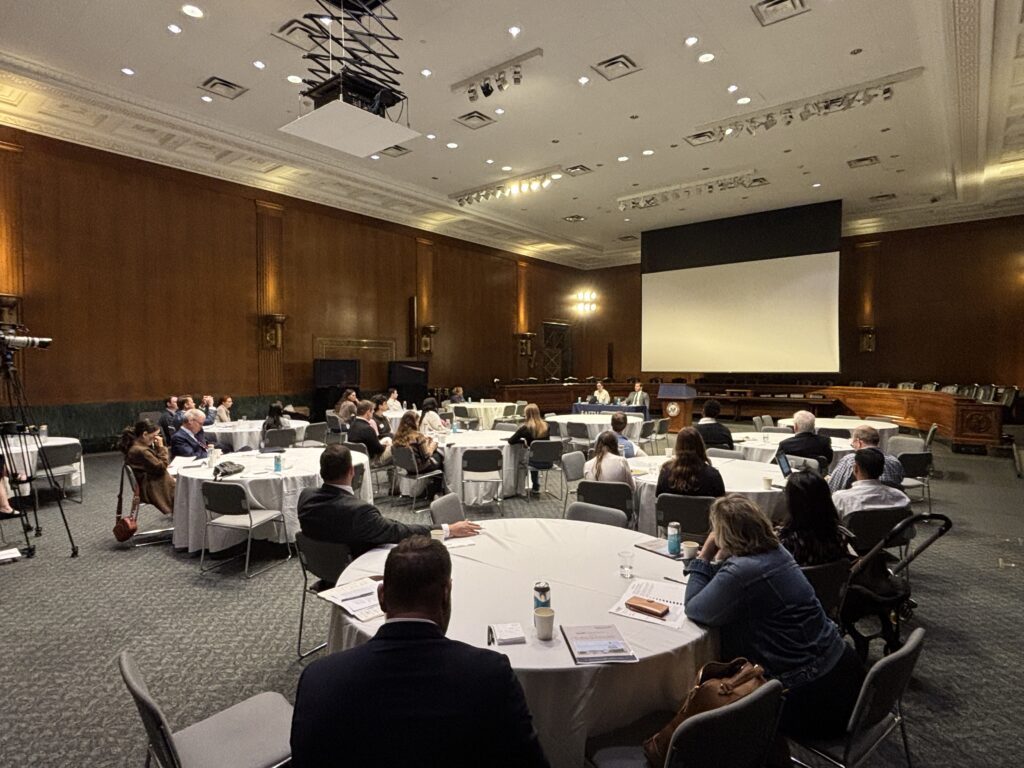
Faith and Law is a non-profit ministry started by policy makers and for policy makers.