Remembering George Washington: Imperfect yet Indispensable
“How can we call George Washington indispensable when his sins included slaveholding, ambitious profitseeking, and a dated understanding of indigenous peoples?”
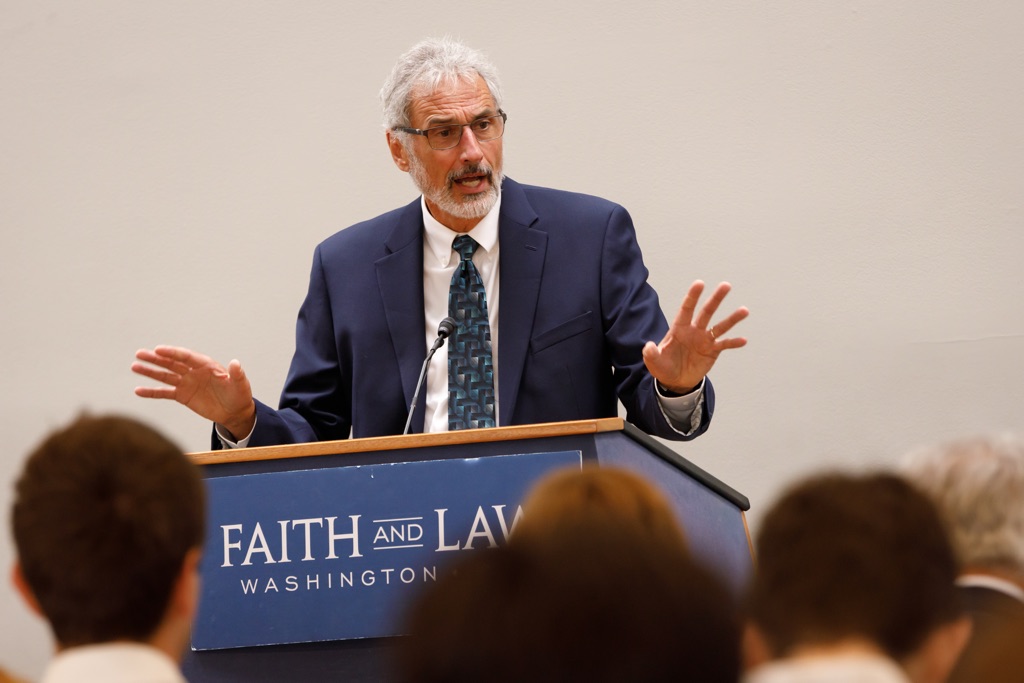
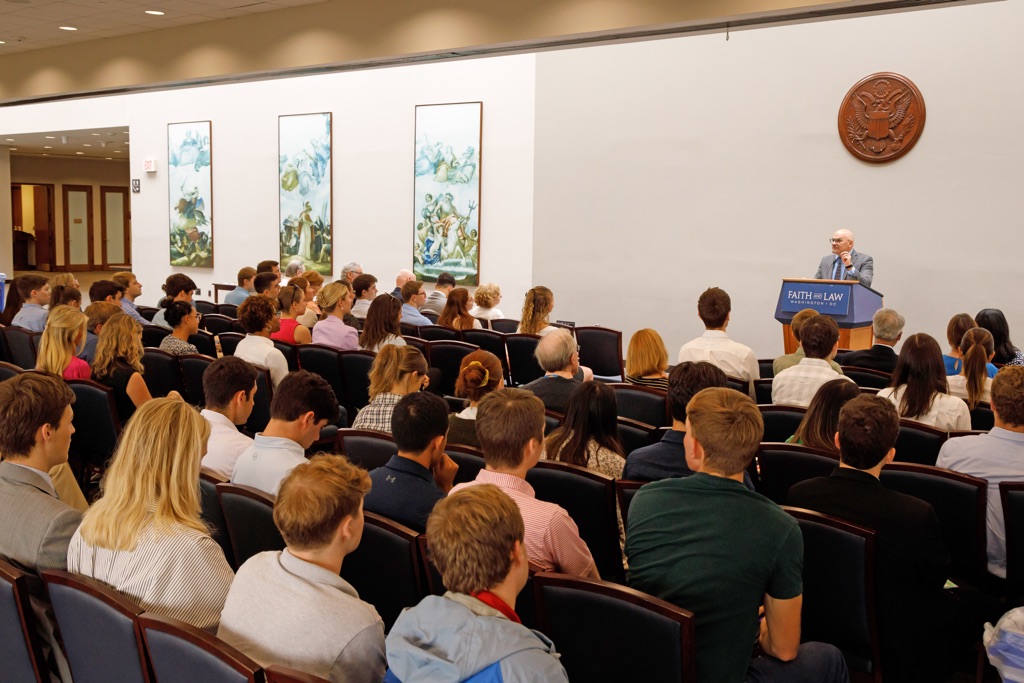
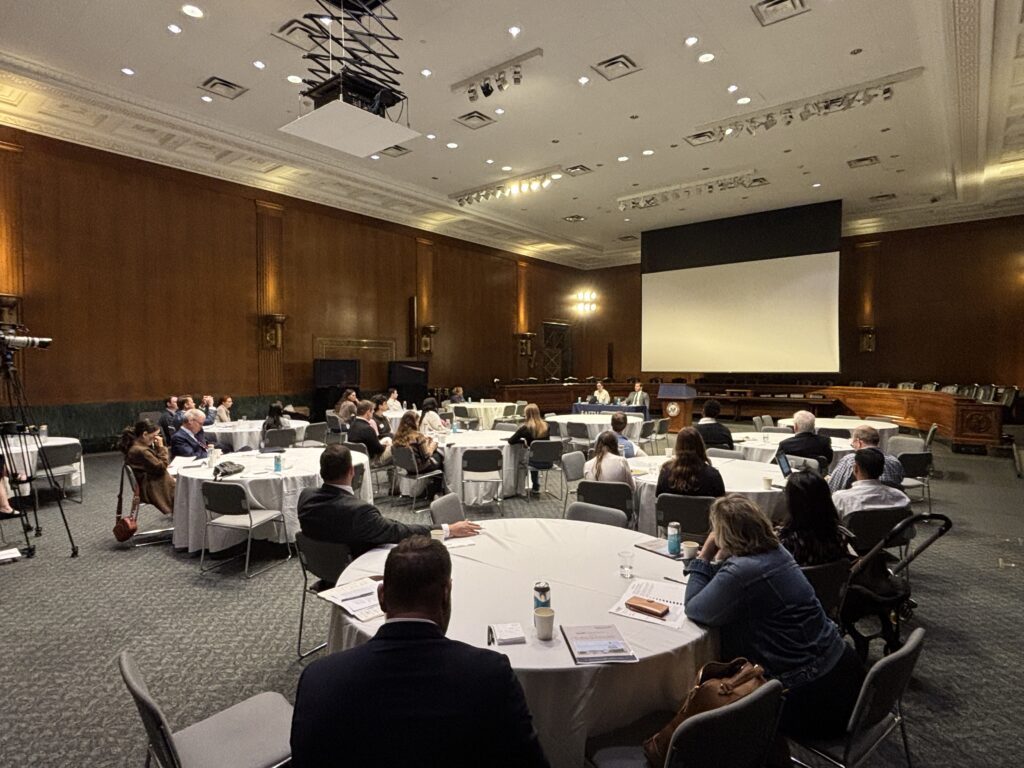
So began a remarkable Friday Forum by Dr. Joseph Prud’homme, Burton Family Chair in Religion, Politics, and Culture and Associate Professor of Political Science and Affiliated Faculty member in Religious Studies at Washington College. Professor Prud’homme is also the founding Director of the Institute for Religion, Politics, and Culture at Washington College. Founded in 1782, the College is the namesake of General Washington, who reportedly donated 50 guineas to get it started!
Prud’homme answered his provocative question by providing a moral biography of the first President – and commended his character to Capitol Hill staffers. “To those who still see this nation to a large degree as fundamentally good, but still imperfect, George Washington is indispensable in astoundingly positive ways.”
Drawing on the work of numerous historians, Prud’homme argued that Washington was indispensable for the “success of the war for independence, the basic charter of our national government, and the nature of the office of the presidency.” His two terms in office “made this position what we know it to be: an independent, energetic yet not imperious presidency.”
Prud’homme credits several “indispensable virtues” for Washington’s positive influence on the young country. These include his personal integrity and a commitment to strong moral principles; courage to prevail against “long long odds;” a “self-confident openness to seek the counsel of others;” and wisdom demonstrated in his “political and legal” ideas.
Washington’s Christian faith and his “deep love of Martha and her children” anchored his life. Addressing questions about the depth of Washington’s faith, Prud’homme cited scholars who find in his prayers, public declarations, and his trust in Divine Providence, evidence of true belief. Washington was “devout but unceremonious,” exhibiting a public reserve that was common among “low-church” Anglicans in the 18th century.
How should we view Washington these 250 years later? Rather than elevate Washington as a “fabled Cincinnatus” or “infallible seer” Prud’homme encouraged congressional aides to view him as a “human with the weaknesses of all mortal men” – and draw inspiration from that.
“He was not perfect,” acknowledged Prud’homme. “He was slow to question slavery, and in many ways a cruel master.” Although in his will, Washington freed the slaves he could, “it still took a while – and we should fault him for that.”
Even so, there is much to emulate. “It was how he lived, imperfectly, the values he proclaimed…that his vision and his person become for us not aspirations fit for an olympian view, but the basis for each fallible one of us to be inspired and to advance those republican institutions and that culture of decency, public service and responsible citizenship that Washington so tirelessly defended.”
Thank you, Dr. Prud’homme and Washington College, for this scholarly assessment of the moral character of America’s founding President. As we celebrate America’s 250th birthday, may we take to heart George Washington’s commitment to a culture of decency, public service, and responsible citizenship.
Faith and Law is a non-profit ministry started by policy makers and for policy makers.